Seat Belt OEM Supplier Automotive Safety Components
  1. Home
  2. Seat Belt Components
Components

What each part of a seat belt actually does

A plain-language reference to the elements commonly found in an automotive seat belt system — what each one is for, what it has to work with, and what changes from vehicle to vehicle.

01System Logic

Five functions, however they are packaged

Designs differ widely, but the same jobs have to be done somewhere in the assembly. Knowing which function you are asking about is usually more useful than knowing a part name.

  1. F1

    Restrain

    Something has to span the occupant and carry load across the body. That is the webbing’s job, and everything else exists to position it or hold it.

  2. F2

    Engage

    The belt has to be fastened and released deliberately. A tongue plate and a buckle form this pair, and they are only meaningful in relation to each other.

  3. F3

    Manage travel

    Webbing has to be paid out to be used and drawn back when it is not. Retraction handles this, along with the housing and interface parts around it.

  4. F4

    Route

    The belt has to run along a defined path. Guides, loops and adjusters set where that path goes and keep the webbing running cleanly along it.

  5. F5

    Anchor

    The assembly has to transfer load into the vehicle structure. Anchorage points and their fixings are where the belt stops being a belt and becomes part of the vehicle.

02Element Reference

Element by element

Six entries covering what is most often asked about. Descriptions are general — specific designs, dimensions, materials and suitability depend entirely on the application.

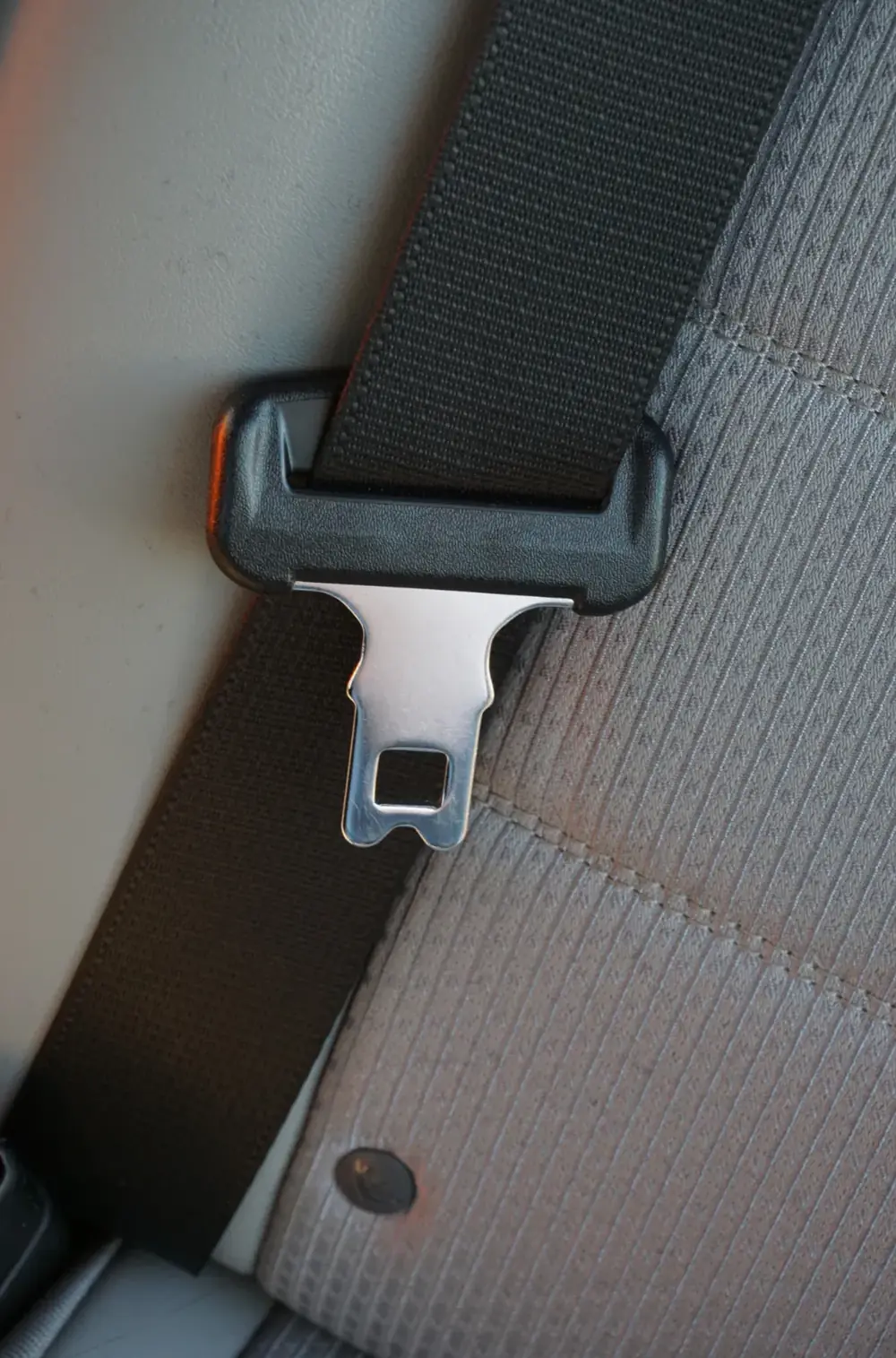
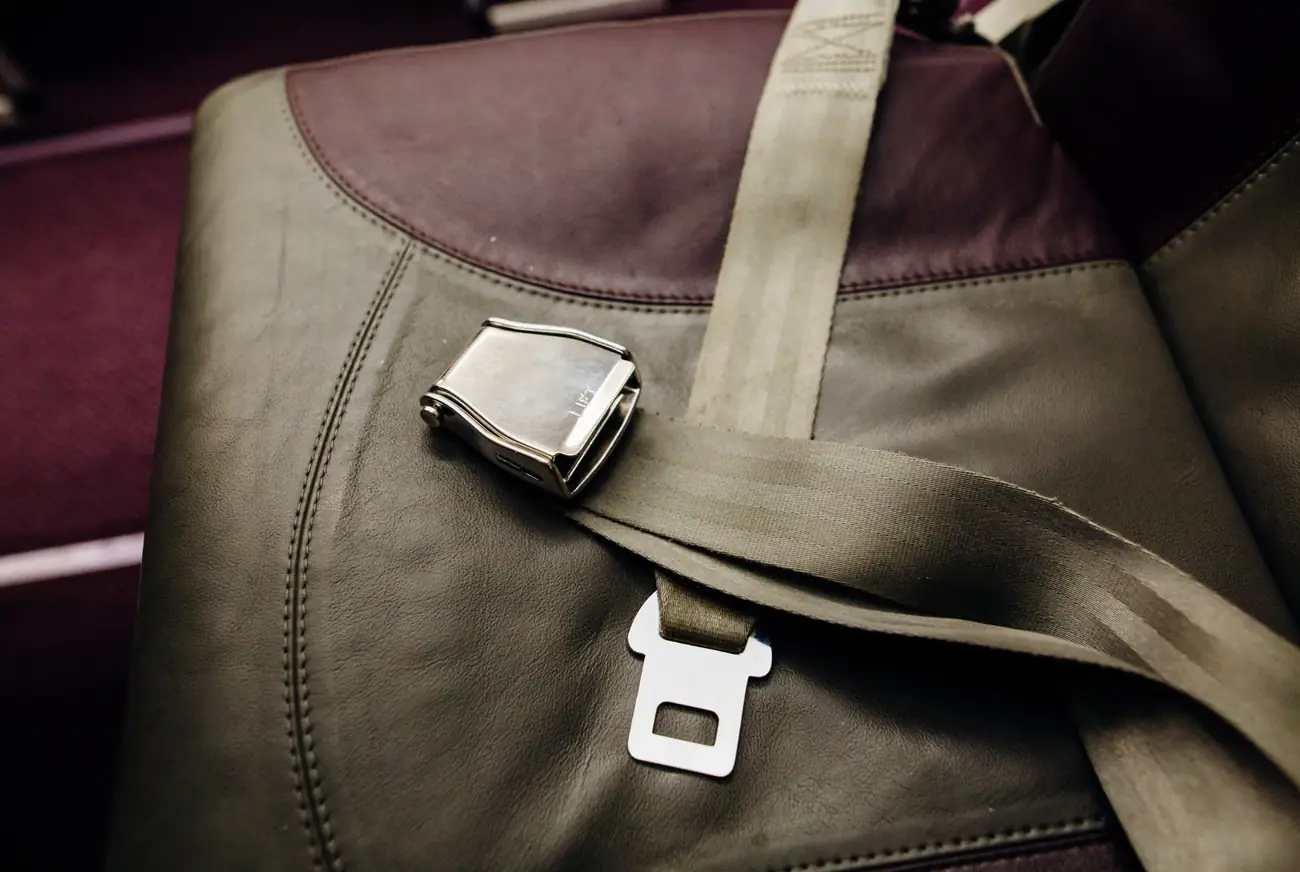
Seat belt webbing running across an upholstered seat towards a metal lift-latch buckle
Element 01

Webbing

The woven belt that spans the occupant. It is the only part of the system most people ever consciously touch, and the part every other element is arranged around.

Webbing has to run cleanly through every guide and adjuster on its path, terminate correctly at each end, and provide enough travel for the seating position it serves.

Works With
Guides, loops, adjusters, tongue plate, anchorage
Varies By
Width, length, weave, finish, termination type
Send Us
Routing path, travel needed, what it terminates into
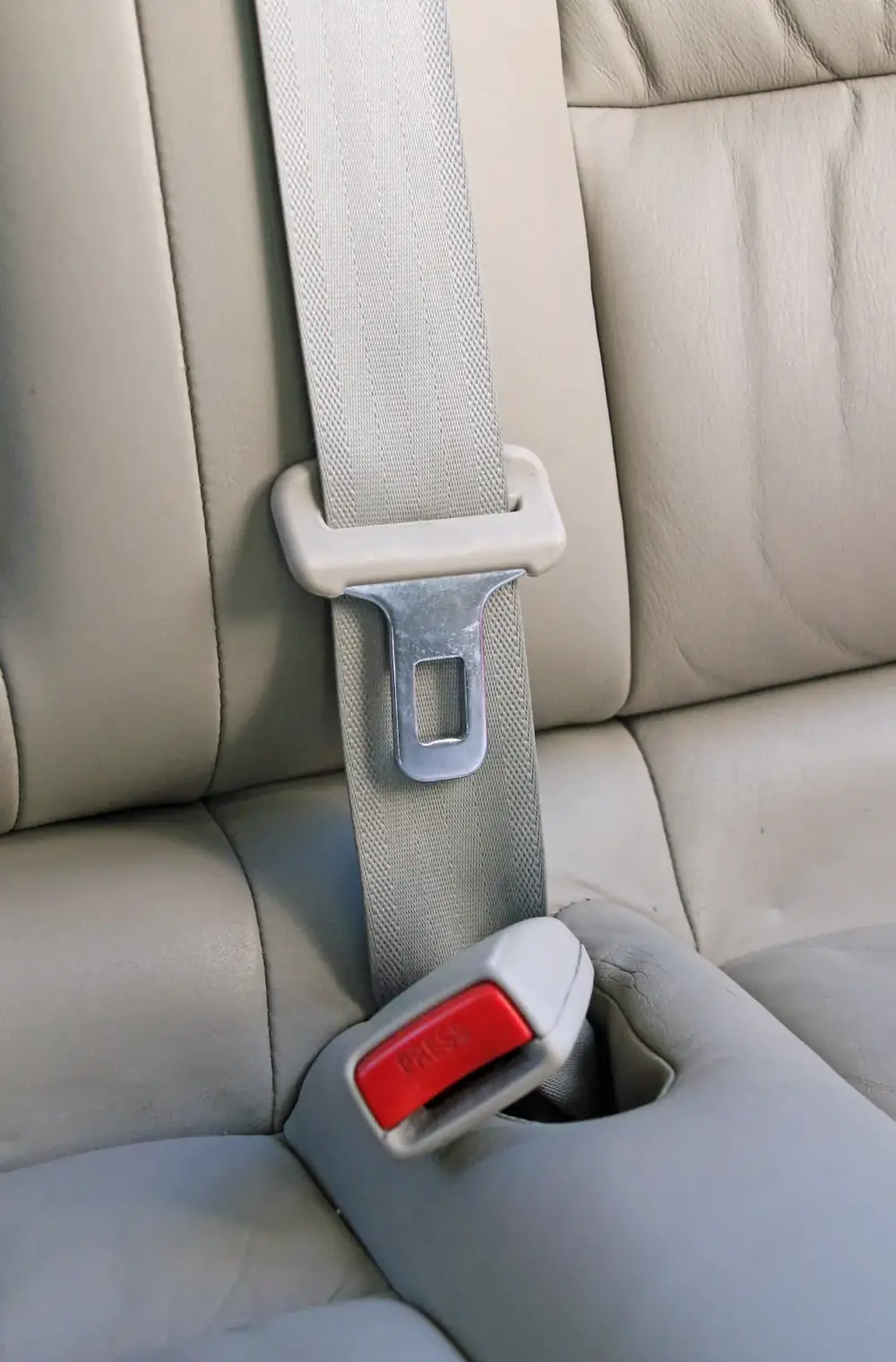
Metal seat belt tongue plate held next to its buckle housing inside a vehicle
Element 02

Tongue Plate

The metal latch plate that travels along the webbing and enters the buckle. Small, easily overlooked, and one of the most common sources of a compatibility problem.

Its profile, slot geometry and thickness all have to correspond to the buckle it engages. A tongue plate that enters a buckle is not automatically the correct tongue plate for it.

Works With
Buckle housing, webbing
Varies By
Plate profile, slot geometry, thickness, webbing attachment
Send Us
The buckle it must engage, ideally photographed
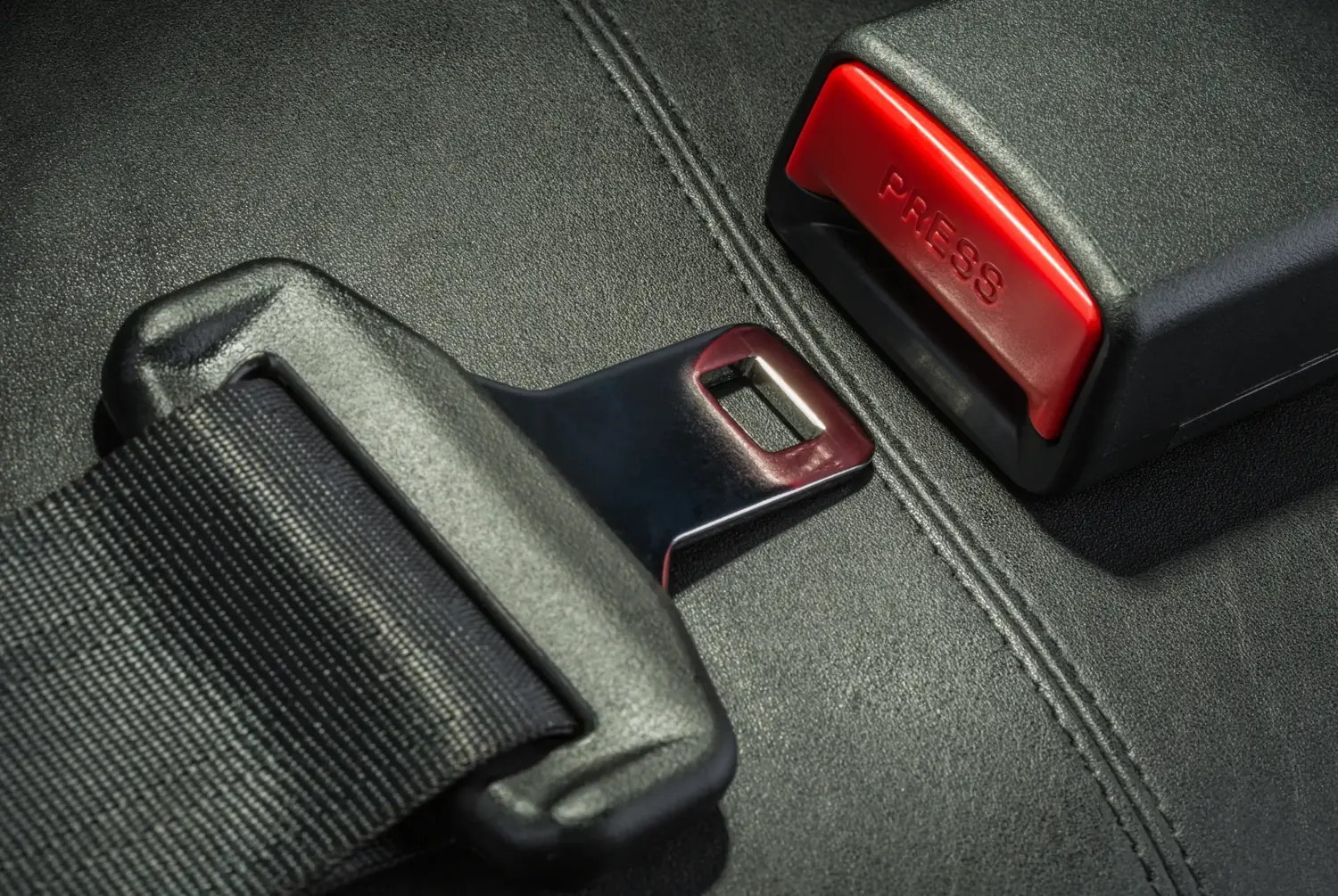
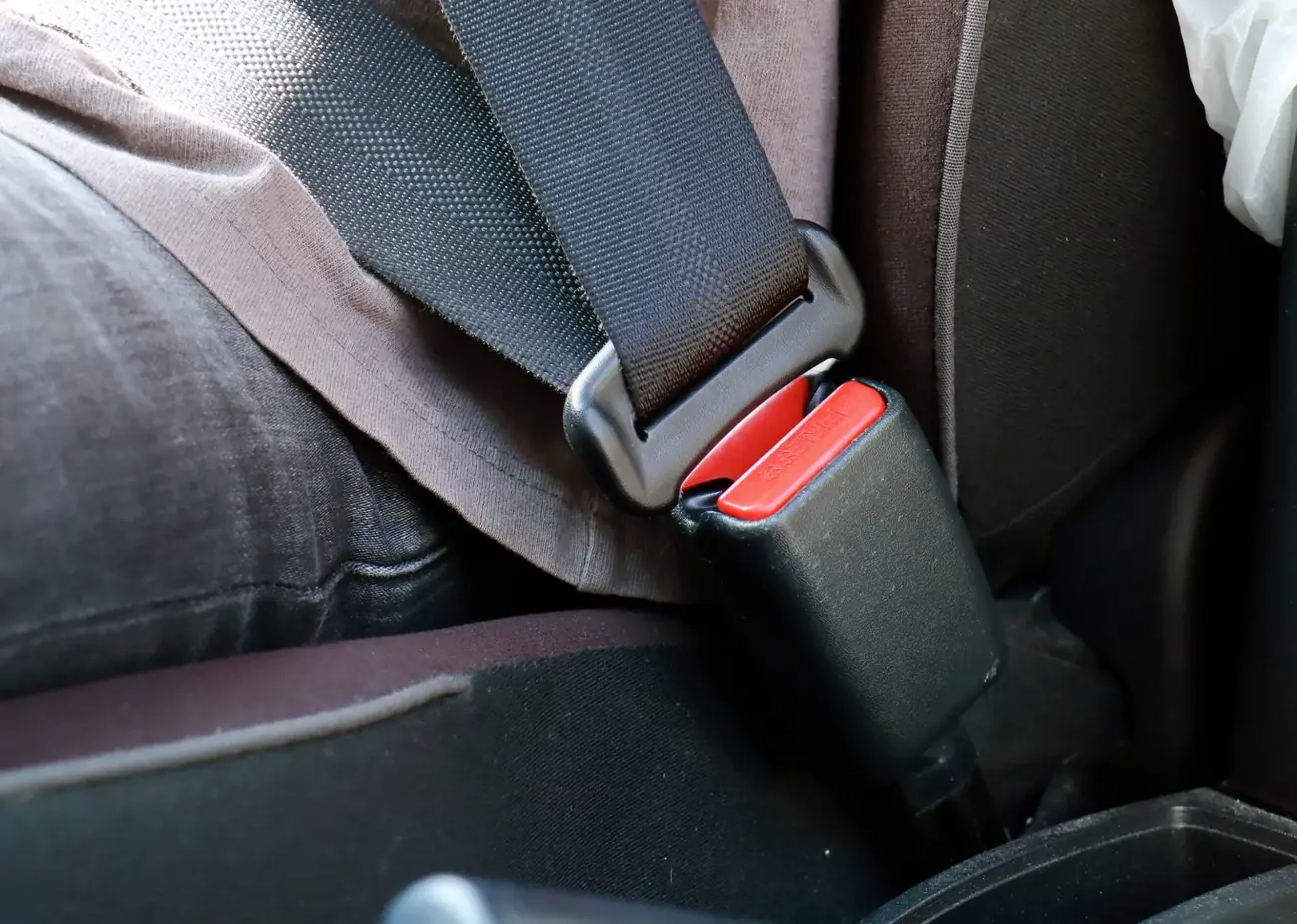
Seat belt buckle housing with a red release button positioned beside a latch plate on dark trim
Element 03

Buckle Mechanism

The receiving half of the engagement pair. It accepts the tongue plate, holds it against load, and releases it when the release element is operated.

Buckles come with a stalk, a webbing tail or a direct mounting arrangement, and that choice is driven by the seat and floor geometry rather than by the buckle itself.

Works With
Tongue plate, seat frame or floor mounting
Varies By
Housing form, stalk type and length, mounting orientation
Send Us
Seating position, mounting arrangement, tongue plate detail
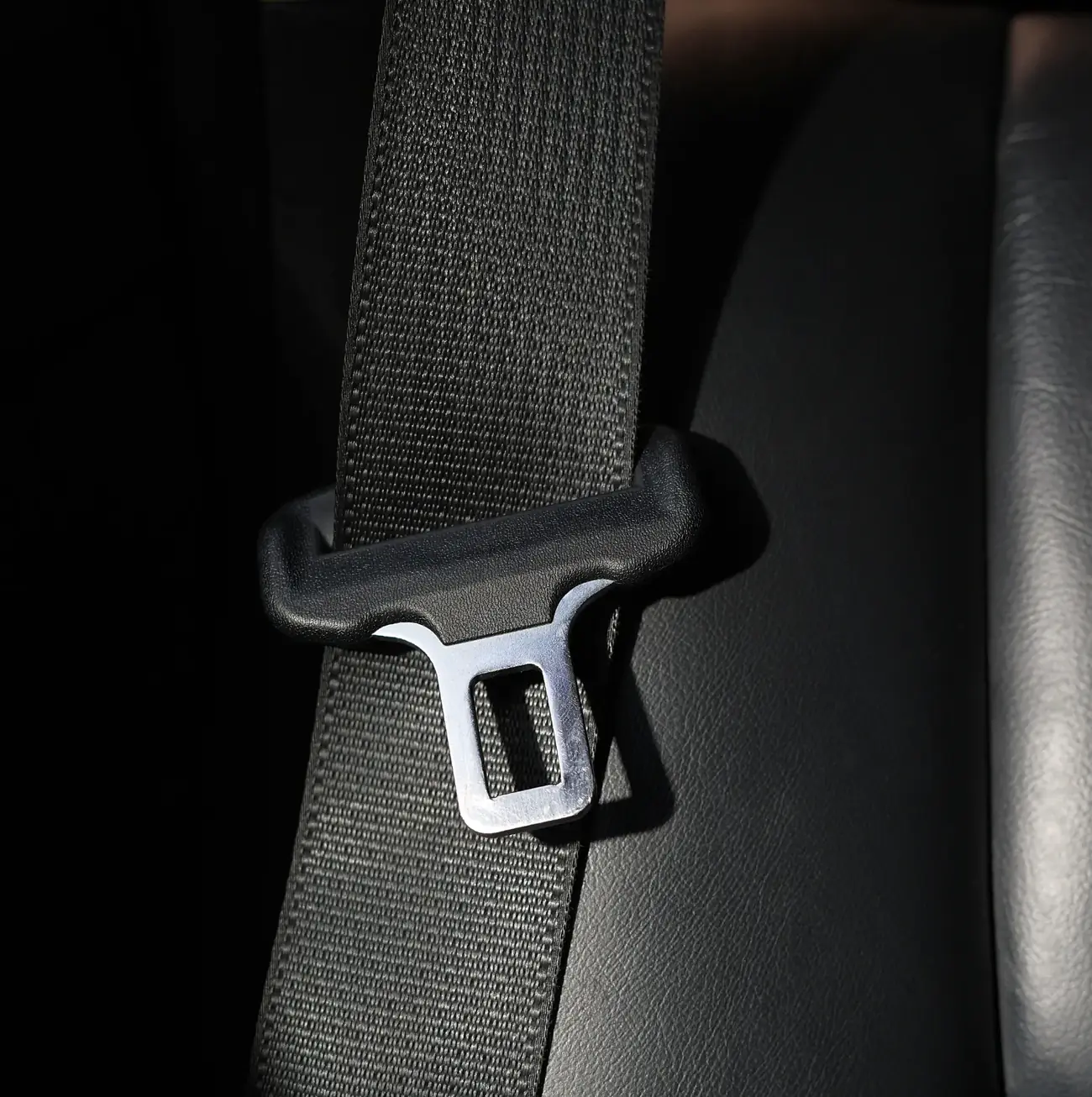
Seat belt webbing threaded through a moulded guide with the tongue plate hanging below it
Element 04

Retraction & Webbing Travel

The elements that draw webbing in and let it out, together with the housing and interface parts that sit around them at the anchored end of the routing path.

Because retraction lives at one end of the path, these discussions turn on where the unit sits, how the webbing leaves it, and what it has to clear on the way to the first guide.

Works With
Webbing, mounting structure, first guide in the path
Varies By
Mounting position, webbing exit direction, available clearance
Send Us
Where it mounts and how much space surrounds it
Seat belt passing through an upper height adjuster loop with the latch plate and buckle visible below
Element 05

Height Adjusters & Upper Guides

The upper part of the routing path, where the belt turns from vertical to diagonal across the occupant. Adjusters allow that turning point to be moved to suit different occupants.

These parts are visible, frequently handled, and closely tied to the pillar or seat structure they mount into — which makes them among the most vehicle-specific items in the system.

Works With
Webbing, pillar or seat structure
Varies By
Mounting geometry, adjustment range, loop form
Send Us
A photograph of the existing arrangement in place
Moulded pillar loop guiding seat belt webbing with a metal tongue plate resting alongside it
Element 06

Pillar Loops, Anchorage & Hardware

The fixed points where the assembly meets the vehicle: loops that turn the webbing, anchor plates that carry load into the structure, and the fixings that hold both.

Two vehicles can use loops that look almost identical and mount completely differently. This is the group where a written description is least reliable and a photograph is worth the most.

Works With
Vehicle structure, webbing, seat frame
Varies By
Mounting geometry, fixing type, loop profile, orientation
Send Us
Photographs from more than one angle, plus the vehicle
03Variation

Why the same name means different parts

Component naming is not standardised across the industry. Four things in particular cause two correctly described parts to be incompatible.

A

Interface geometry

Slot shapes, plate profiles, stalk lengths and mounting hole patterns vary between vehicles even where the component performs an identical function. Geometry, not description, determines whether two parts work together.

B

Seating position

Front and rear positions in the same vehicle frequently take different assemblies. Outboard and centre positions differ again. A requirement covering several positions is several requirements.

C

Routing and available space

Where the belt runs and how much room surrounds it changes what will physically fit. Clearance problems tend to appear at installation rather than at specification, which is why they are worth raising early.

D

Vehicle-specific variants

The same model can carry different arrangements across variants, model years or markets. Naming the variant, not only the model, removes a whole category of ambiguity.

Scope of this page

What this reference does not do

It does not state dimensions, materials, load figures, test results or approvals. It does not confirm that any component is suitable for any particular vehicle. And it does not replace checking a part against the application it is going into.

What it does do is give you the vocabulary to describe what you need, so an enquiry can be answered properly the first time rather than after several rounds of clarification.

Specific designs, compatibility, specifications and suitability depend on the application and requirement. Nothing on this page should be read as a compatibility statement for a particular vehicle.

Related reading: the major components of a seat belt and why vehicle application details matter.

Component enquiry

Not sure which element you need? Describe what it does.

A functional description and a photograph will get you further than a guessed part name. Send what you have and the gaps will be identified for you.